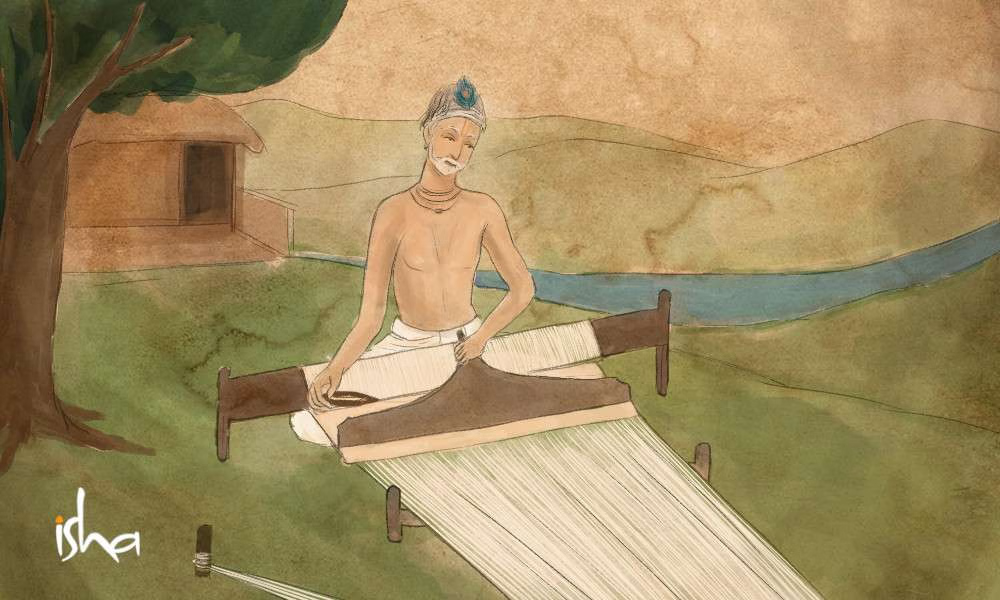
Unity Beyond the Veil: The Wisdom of Kabir
In the profound words of Kabir, "Of the same dye are this world and that beyond," we are invited to contemplate the interconnectedness of our earthly existence and the spiritual realms that lie beyond our immediate perception. This statement challenges the dualistic thinking that often separates the material from the spiritual, urging us to recognize that both realms are woven from the same fabric of existence. Understanding this unity is not merely an intellectual exercise; it has the power to transform our experience of life, leading us toward a deeper sense of belonging and purpose.
As we delve into Kabir's insight, we uncover layers of meaning that resonate with the essence of bhakti, the devotional path that emphasizes love and surrender to the divine. This quote serves as a reminder that the boundaries we perceive between the physical world and the spiritual realm are often illusory. By embracing the idea that both worlds share a common origin, we can cultivate a more profound sense of connection with ourselves, others, and the universe at large, ultimately guiding us toward a more harmonious existence.
The image / the metaphor
At its core, Kabir's quote employs the metaphor of dye to illustrate the intrinsic relationship between the material and spiritual worlds. The use of "dye" suggests a process of transformation, where the essence of one realm permeates the other, coloring our experiences and perceptions. This imagery evokes a sense of fluidity and interconnectedness, inviting us to see beyond the surface distinctions that often divide our understanding of existence. The verbs chosen—"are"—imply a state of being that transcends mere appearance, pointing to a deeper reality that binds all things together.
Diving deeper into this metaphor, we can consider how dye not only alters the appearance of fabric but also signifies a fundamental change in its nature. Just as a piece of cloth becomes imbued with the color it absorbs, our lives are shaped by the spiritual truths we embrace. This transformation is not confined to a singular moment; it is an ongoing process that invites us to engage with both worlds actively. In recognizing that both the material and spiritual realms are of the same dye, we are encouraged to seek harmony and balance in our lives, understanding that our earthly experiences can lead us to profound spiritual insights.
In the speaker's tradition
Kabir's teachings emerge from the rich tradition of bhakti, which emphasizes devotion and love for the divine as a means of realizing unity with all existence. Central to this tradition is the concept of *fana*, or self-annihilation, where the individual ego dissolves into the greater whole, allowing for a direct experience of the divine. This dissolution of boundaries aligns with Kabir's assertion that the worlds are of the same dye, as it encourages practitioners to transcend the dualities that often separate the sacred from the mundane. In this light, the quote serves as a call to embrace a holistic understanding of life, where every experience is imbued with spiritual significance.
To further illustrate this point, we can look to the *Bhagavad Gita*, a foundational text in the bhakti tradition, which emphasizes the interconnectedness of all beings through the lens of *dharma* and *prajna*. In Chapter 2, Krishna speaks of the eternal nature of the soul, reminding Arjuna that the physical body is transient while the essence of life is everlasting. This echoes Kabir's sentiment that both worlds are intertwined, urging us to recognize the divine presence in every aspect of our lives, whether in joy or suffering, and to act with love and compassion toward all beings.
Living the teaching
In our modern lives, the teaching of Kabir can manifest in various ways, particularly in how we navigate the complexities of our relationships. Consider a scenario where a friend is going through a difficult time, perhaps facing loss or disappointment. By embodying the understanding that this world and the next are of the same dye, we can approach our friend with empathy and compassion, recognizing that their suffering is not separate from our own. This perspective allows us to connect on a deeper level, fostering a sense of solidarity that transcends the individual experience and highlights our shared humanity.
Another application of this teaching can be found in our daily practices, such as meditation or mindfulness. When we sit in stillness, we often encounter the duality of our thoughts and emotions, which can feel overwhelming. However, by remembering Kabir's insight, we can approach these experiences with a sense of acceptance, understanding that they are part of the same fabric of existence. This awareness can transform our practice into a space of unity, where we embrace both the light and the shadow, allowing us to cultivate a deeper sense of peace and connection with ourselves and the world around us.
A reflection
As we contemplate Kabir's profound assertion, we are invited to reflect on the ways in which we perceive the world around us. How do we separate our spiritual experiences from our daily lives, and what might change if we embraced the idea that both realms are woven from the same dye? This question encourages us to explore the interconnectedness of our existence, prompting us to seek harmony in our thoughts, actions, and relationships. In this exploration, we may discover a deeper sense of purpose and belonging, ultimately guiding us toward a more unified experience of life.



Join the BrightStar Community
Stay connected with daily inspiration, event announcements, and community wisdom