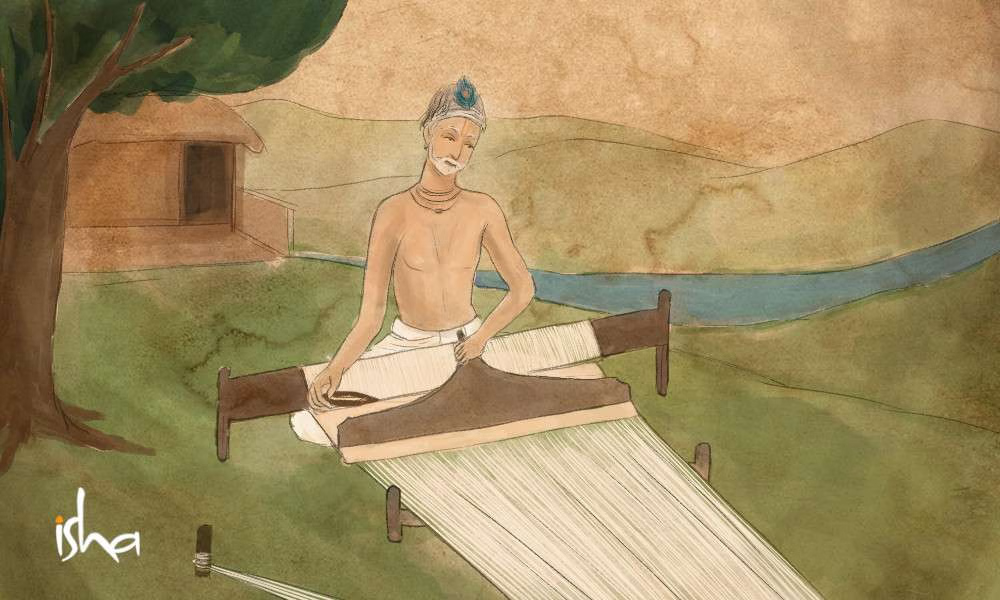
The Dust of Devotion: Embracing Humility in the Path of Kabir
In the profound simplicity of the phrase "Kabir is the dust at His feet," we encounter a powerful expression of humility and devotion. This statement encapsulates the essence of surrendering oneself to the divine, recognizing that true spiritual fulfillment lies not in the elevation of the self but in the embrace of a lower, more humble position. The stakes are high, as this teaching invites us to reconsider our relationship with the divine and our place within the vast tapestry of existence.
To be "the dust at His feet" is to acknowledge the vastness of the divine and our infinitesimal role within it. It is an invitation to dissolve the ego and to find beauty in the act of surrender. In a world that often celebrates individual achievement and self-promotion, Kabir's words remind us that the path to spiritual awakening is paved with humility and devotion. This perspective not only enriches our understanding of ourselves but also deepens our connection to the divine, urging us to seek a relationship grounded in love and reverence.
The image / the metaphor
The imagery of dust at the feet evokes a visceral sense of proximity and reverence. Dust, often overlooked and considered insignificant, symbolizes the essence of humility. It is the residue of the earth, a reminder of our origins and our ultimate return to the ground. By positioning himself as dust, Kabir emphasizes the importance of being grounded in reality, of recognizing our limitations, and of surrendering to a higher power. The act of being at the feet of the divine suggests a posture of worship, where one is not only close to the divine but also in a state of submission.
Diving deeper into this metaphor, we can see that dust is also a symbol of transformation. It is through the process of decay and dissolution that new life emerges. In this light, Kabir's declaration can be understood as an invitation to embrace our own vulnerabilities and imperfections. Just as dust is integral to the cycle of life, our humility and surrender can lead to profound spiritual growth. The dust at His feet becomes a sacred space where the divine and the human meet, a place of potential and renewal.
In the speaker's tradition
Kabir's teachings are deeply rooted in the bhakti tradition, which emphasizes personal devotion to the divine as a path to spiritual liberation. This tradition values the heart's sincerity over ritualistic practices, encouraging followers to cultivate a direct and intimate relationship with God. Concepts such as bhakti, or devotion, and kenosis, the self-emptying of one's will, resonate strongly with Kabir's assertion of humility. In this context, being "the dust at His feet" aligns with the idea of fana, or annihilation of the self, where the devotee loses their individual identity in the love of the divine.
In the broader landscape of spiritual literature, Kabir's sentiment echoes the teachings found in the Bhagavad Gita, where surrender to the divine will is portrayed as the ultimate act of devotion. In Chapter 18, Krishna advises Arjuna to abandon all forms of religion and simply surrender to Him. This call to surrender is not a relinquishing of agency but rather an invitation to align oneself with a higher purpose. Kabir's words resonate with this call, urging us to recognize that true strength lies in our ability to yield to the divine flow of life.
Living the teaching
In our modern lives, the teaching of being "the dust at His feet" can manifest in various ways. Consider a scenario where one faces a challenging situation at work, perhaps a conflict with a colleague or a demanding project. In such moments, the instinct may be to assert oneself, to fight for recognition or validation. However, embracing the humility of Kabir's teaching invites us to step back, to listen, and to approach the situation with a spirit of service rather than self-interest. By adopting this posture, we can foster collaboration and understanding, transforming a potential conflict into an opportunity for growth.
This teaching also finds resonance in our personal relationships. Imagine a moment of tension with a loved one, where pride and defensiveness threaten to create a rift. Here, the practice of humility becomes essential. By embodying the essence of being "the dust at His feet," we can choose to let go of our ego, to apologize, or to simply listen with an open heart. This act of surrender not only heals the relationship but also deepens our connection, allowing love to flourish in the space created by humility.
A reflection
As we contemplate Kabir's profound declaration, we are invited to reflect on our own lives and the ways in which we hold onto our egos. What does it mean for us to be "the dust at His feet"? In what areas of our lives can we practice surrender and humility? As we ponder these questions, may we find the courage to embrace our smallness in the grand scheme of existence, allowing our devotion to guide us toward a deeper connection with the divine.




Join the BrightStar Community
Stay connected with daily inspiration, event announcements, and community wisdom