The Paradox of the Divine: Embracing the Limit and the Limitless
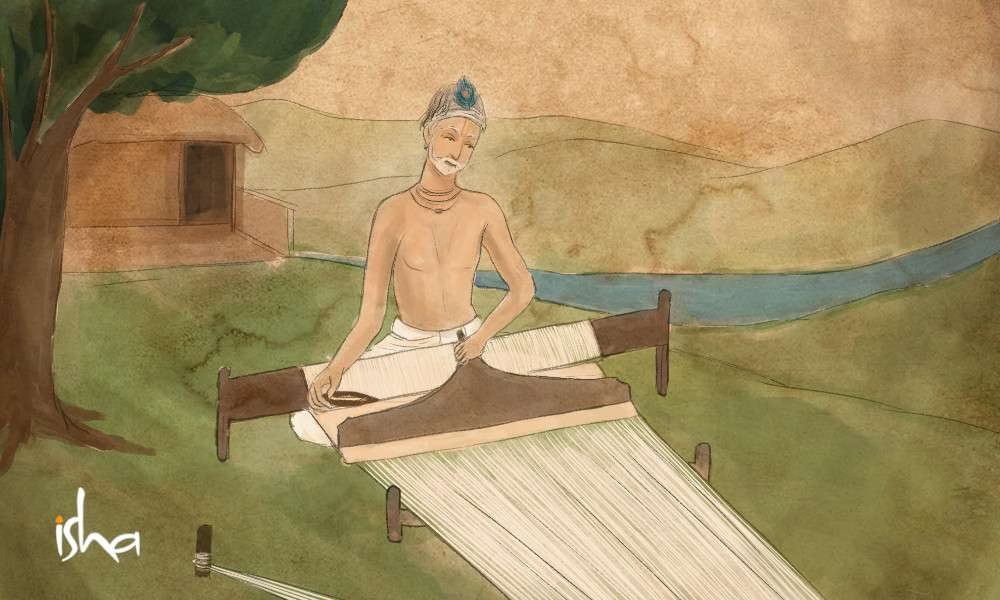
In the profound words of Kabir, "He is the limit and the limitless," we encounter a striking paradox that invites us to explore the nature of the divine. This statement encapsulates the duality inherent in our understanding of God, suggesting that the divine is both defined and undefinable, both personal and transcendent. The significance of this insight lies in its ability to challenge our conventional perceptions of spirituality, urging us to embrace the complexities and contradictions that characterize our relationship with the sacred.
As we delve deeper into this quote, we recognize that it speaks to the heart of the bhakti tradition, where devotion is not merely an act of worship but a profound engagement with the divine mystery. Kabir, a 15th-century poet-saint, invites us to transcend the limitations of our understanding and to experience the divine in its fullness. This exploration of the limit and the limitless serves as a reminder that our spiritual journey is not about arriving at definitive answers but about embracing the questions that lead us toward a deeper connection with the infinite.
The image / the metaphor
The imagery in Kabir's quote evokes a sense of both containment and expansiveness. The word "limit" suggests boundaries, a defined space where one can find solace and security. In contrast, "limitless" conjures the vastness of the cosmos, the boundless nature of existence that defies our attempts to categorize or confine it. This duality is not merely a linguistic play; it reflects the lived experience of many seekers who find themselves oscillating between the comfort of certainty and the awe of the unknown.
Diving deeper into the metaphor, we see that the divine as both limit and limitless invites us to consider our own spiritual practices. Just as we may seek refuge in the structured teachings of our faith, we are also called to venture into the uncharted territories of our spiritual lives. This interplay between the known and the unknown encourages us to cultivate a relationship with the divine that is dynamic and evolving, one that honors both the sacred texts and the personal revelations that arise from our experiences.
In the speaker's tradition
Within the bhakti tradition, Kabir's assertion resonates with key concepts such as dharma and bhakti itself. Dharma, often understood as the moral and ethical path, provides a framework within which we can explore our relationship with the divine. However, Kabir's words remind us that adherence to dharma does not confine the divine; rather, it serves as a guide that leads us toward the limitless nature of God. This tension between structure and freedom is a hallmark of bhakti, where devotion becomes a pathway to experiencing the divine in its entirety.
Moreover, Kabir's perspective aligns with the notion of kenosis, or self-emptying, found in various spiritual traditions. Just as the divine can be both limit and limitless, so too can our understanding of self be both defined and expansive. In the context of Kabir's poetry, we see echoes of this idea in his verses that call for the dissolution of the ego, allowing the seeker to merge with the infinite. This merging is not a loss of identity but rather an expansion into a greater understanding of existence.
Living the teaching
Consider a modern scenario where this teaching might resonate: a person grappling with the constraints of their daily life, feeling overwhelmed by responsibilities and expectations. In such moments, the idea that the divine is both limit and limitless can offer solace. It encourages the individual to recognize that while they may feel confined by their circumstances, there exists a vastness within them that is connected to something greater. This realization can inspire a shift in perspective, transforming feelings of limitation into opportunities for spiritual growth and exploration.
In relationships, this teaching can manifest in profound ways. Imagine a conflict arising between two partners, each feeling the weight of their own limitations and misunderstandings. By embracing the paradox of the divine, they can approach their differences with a sense of openness and compassion. Recognizing that both individuals are expressions of the same limitless source allows for a deeper connection, fostering empathy and understanding. In this way, the teaching of Kabir becomes a guiding principle in navigating the complexities of human relationships.
A reflection
As we contemplate Kabir's profound assertion, we are invited to reflect on our own understanding of the divine. How do we perceive the limits in our lives, and how might we also recognize the limitless potential that lies within us? This contemplation encourages us to embrace the paradoxes of our existence, allowing us to cultivate a deeper relationship with the divine that honors both our boundaries and our boundless nature.



Join the BrightStar Community
Stay connected with daily inspiration, event announcements, and community wisdom