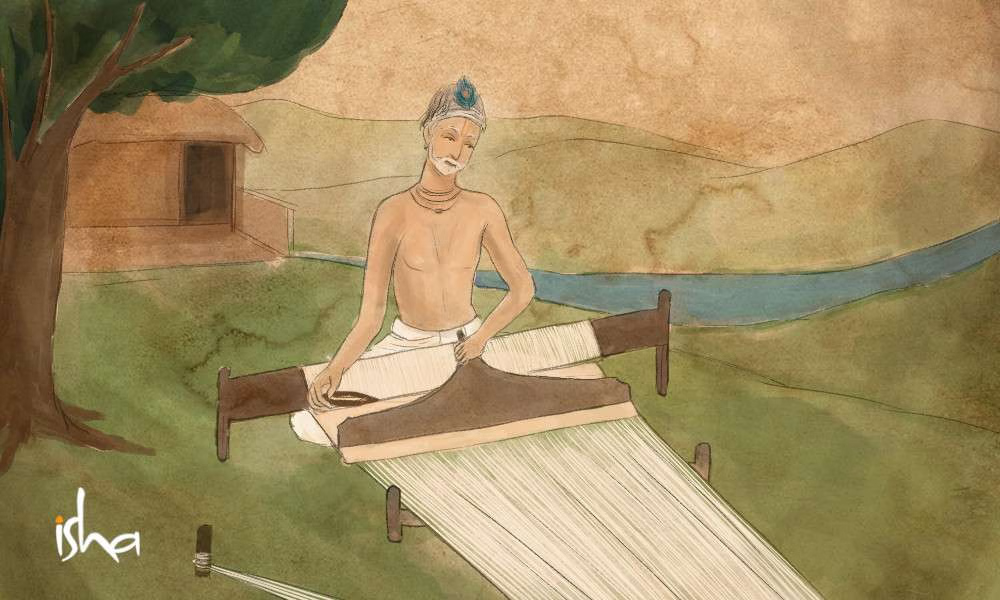
Embracing the Essence of Truth
In the words of Kabir, "Bathe in the truth, know the true Guru, have faith in the true Name!" we find a profound invitation to immerse ourselves in the essence of reality, guided by a genuine teacher, and anchored in the sacred sound of the divine Name. This call to action resonates deeply within the human experience, urging us to seek authenticity in a world often clouded by illusion. The stakes are high; our spiritual journey hinges on our ability to discern truth from falsehood, to connect with a guiding presence, and to cultivate unwavering faith in the divine.
As we delve into this quote, we uncover layers of meaning that speak to the heart of spiritual practice. Kabir, a luminary of the bhakti tradition, emphasizes the importance of direct experience over dogma, inviting us to engage with truth not merely as an abstract concept but as a lived reality. This journey is not just personal; it is a collective awakening that calls for sincerity, devotion, and an open heart, reminding us that the path to enlightenment is paved with the courage to confront our own illusions.
The image / the metaphor
The imagery in Kabir's quote is rich and evocative. To "bathe in the truth" conjures a sense of purification, suggesting that truth is a cleansing force that washes away the impurities of ignorance and delusion. The act of bathing implies a deep immersion, a surrender to the waters of wisdom that nourish the soul. The phrase "know the true Guru" speaks to the necessity of guidance on this journey, highlighting the importance of finding a teacher who embodies the truth we seek. Finally, "have faith in the true Name" encapsulates the essence of devotion, urging us to anchor our spiritual practice in the sacred sound that connects us to the divine.
In the speaker's tradition
Kabir's teachings are deeply rooted in the bhakti tradition, which emphasizes personal devotion and the intimate relationship between the seeker and the divine. Central to this tradition is the concept of bhakti itself, a heartfelt devotion that transcends ritualistic practices and dogmatic beliefs. Kabir's call to "know the true Guru" aligns with the idea of dharma, or righteous living, where the seeker is encouraged to align their life with truth and virtue. This journey often involves a process of kenosis, or self-emptying, allowing the seeker to shed the ego and embrace a more profound connection with the divine.
In the context of Kabir's teachings, we can draw parallels with the concept of sunyata, or emptiness, found in Buddhist philosophy. Just as sunyata invites us to recognize the impermanence of all things, Kabir's emphasis on truth encourages us to see beyond the transient nature of our experiences. The "true Name" can be likened to the notion of fana in Sufism, where the seeker dissolves into the divine presence, losing the sense of self in the process. This interconnectedness of traditions highlights the universal quest for truth and the transformative power of love and devotion.
Living the teaching
In our modern lives, the teaching of Kabir can be applied in various concrete scenarios. Consider a moment of conflict in a relationship, where misunderstandings and assumptions cloud our perception of the other person. By choosing to "bathe in the truth," we can approach the situation with honesty and vulnerability, seeking to understand rather than to be understood. This practice not only fosters deeper connections but also cultivates a sense of compassion, allowing us to see the shared humanity in one another.
Another application of this teaching can be found in our daily routines. Imagine starting each day with a moment of reflection, dedicating time to connect with the "true Name" through meditation or prayer. This practice can ground us, providing clarity and purpose as we navigate the complexities of life. By nurturing our faith in the divine, we create a sanctuary within ourselves, a space where truth can flourish amidst the noise of the world. In doing so, we embody Kabir's wisdom, allowing it to guide our actions and interactions.
A reflection
As we contemplate Kabir's profound invitation, we are left with a contemplative question: How can we more fully immerse ourselves in the truth of our own experiences, while remaining open to the guidance of those who embody wisdom? This question invites us to explore the depths of our own understanding, encouraging us to seek authenticity in our lives and relationships. In this pursuit, may we find the courage to embrace truth, the humility to learn from our teachers, and the faith to trust in the divine Name that resonates within us all.




Join the BrightStar Community
Stay connected with daily inspiration, event announcements, and community wisdom